Article based on Newspaper Style General Interest Article
The Rise of Dropshipping: How a Hands-Off Inventory Model is Reshaping E-Commerce
Entrepreneurs and established retailers alike are leveraging third-party suppliers to minimize overhead, though the path to profitability remains fraught with hidden logistical challenges.

The Lean Retail Shift
Across the globe, a fundamental shift in retail fulfillment is allowing digital entrepreneurs to launch comprehensive online storefronts without ever touching the products they sell. This method, known as dropshipping, has surged in popularity over the last decade, fundamentally altering the barrier to entry in the global e-commerce market.
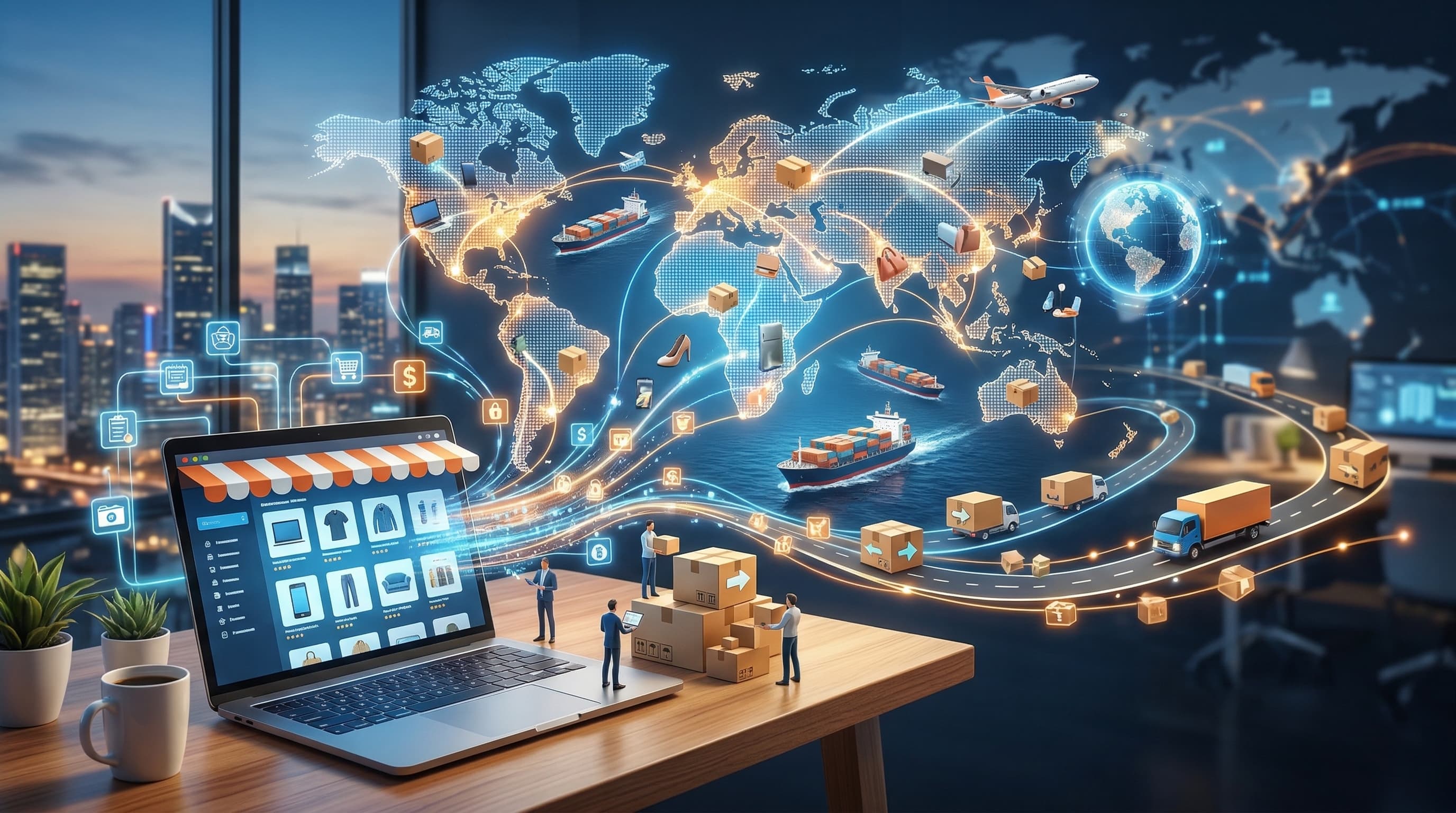
At its core, dropshipping is a supply chain management method where the retailer does not keep goods in stock. Instead, when a store sells a product, it purchases the item from a third party—usually a wholesaler or manufacturer—and has it shipped directly to the consumer.
The model has proven particularly useful for modern businesses looking to test new markets or expand product lines without committing substantial capital to inventory. By decoupling the storefront from the warehouse, businesses can operate from nearly anywhere in the world, requiring only a stable internet connection and a digital marketing strategy.
However, as the market matures in 2024, the initial narrative of dropshipping as a "get-rich-quick" scheme is giving way to a more complex reality. Retailers are now facing increased advertising costs, supply chain bottlenecks, and fierce competition, forcing a strategic evolution in how these businesses operate.
The Architecture of Decentralized Commerce

To understand the current dominance of dropshipping, one must examine the technological infrastructure that makes it possible. Historically, mail-order catalogs utilized a primitive form of this model. Today, the process is governed by sophisticated Application Programming Interfaces (APIs) and automated software platforms.
When a customer places an order on a localized storefront—often powered by platforms like Shopify or WooCommerce—an automated script instantly forwards the order details and shipping information to the supplier. This seamless data exchange allows for real-time inventory synchronization, mitigating the risk of selling out-of-stock items.
For established businesses, this architecture is highly advantageous. A traditional brick-and-mortar retailer looking to expand into related niches can use dropshipping to test consumer demand. If a new product category performs well under the dropshipping model, the retailer can then transition to bulk purchasing to improve profit margins.
Furthermore, dropshipping eliminates the physical constraints of business growth. Traditional scaling requires larger warehouses, more fulfillment staff, and complex logistics networks. In a dropshipping model, scaling simply requires an increase in server bandwidth and advertising spend, as the fulfillment burden remains entirely with the supplier.
This rapid scalability has driven the trend's explosive growth, particularly following the global supply chain disruptions of 2020. As traditional retailers struggled with inventory sitting on cargo ships, digital-native dropshippers pivoted rapidly, rerouting their software to alternative suppliers with available stock.
Profitability, Pitfalls, and Perspectives

Making money in dropshipping relies on a simple mathematical formula: the retail price minus the wholesale cost, shipping fees, and customer acquisition cost (CAC). Because the barrier to entry is low, competition is high, often driving the retail price down while advertising costs on social media platforms continue to rise.
To remain profitable, successful dropshippers focus obsessively on Return on Ad Spend (ROAS). If a product costs $15 to source and ship, and is sold for $45, the gross margin is $30. If the marketing cost to acquire that customer is $20, the net profit is a mere $10. This razor-thin margin highlights the primary vulnerability of the business model.
"The golden era of simply listing cheap products and running basic ads is over. Today's profitable dropshippers are essentially data analysts and digital marketing experts who happen to sell physical goods."
The pros of the model are evident: minimal startup capital, reduced risk, broad product selection, and location independence. Entrepreneurs are not tied to leases or unsold inventory. It democratizes retail, allowing a single operator in a remote location to compete with major department stores.
However, the cons are equally substantial. Dropshippers have virtually no control over product quality, shipping speeds, or inventory management. If a supplier sends a defective item or takes weeks to deliver, the consumer blames the storefront, not the invisible supplier. This often leads to high chargeback rates and suspended merchant accounts.
Additionally, building brand loyalty is inherently difficult. Because multiple stores can source the exact same product from the same overseas manufacturer, differentiation relies entirely on branding, user experience, and customer service—areas where many novice dropshippers fall short.
Impacts on the Broader Retail Ecosystem
The proliferation of dropshipping is sending ripple effects throughout the broader retail industry. Traditional manufacturers are increasingly opening direct-to-consumer (DTC) fulfillment arms, recognizing that they can capture more margin by supporting dropshippers rather than relying solely on bulk wholesale orders.
This shift has also accelerated the growth of the "white labeling" and "print-on-demand" sectors. To combat the issue of selling identical products, many dropshippers now partner with suppliers who apply custom branding to generic items before shipping. This hybrid approach offers the low-risk benefits of dropshipping while building a defensible, long-term brand asset.
For the general public, the impact is a double-edged sword. Consumers now have access to a hyper-niche variety of products that traditional retailers would never stock due to low demand. Independent creators can monetize their audiences by launching custom merchandise stores overnight.
Conversely, consumer trust has taken a hit. The internet is replete with identical storefronts selling subpar goods with extended shipping times. As a result, savvy consumers have learned to reverse-image-search products, often finding the original manufacturer's listing for a fraction of the cost, thereby bypassing the dropshipper entirely.
Looking Ahead: The Future of Inventory-Free Commerce
As the e-commerce landscape continues to mature, the dropshipping model is undergoing a necessary evolution. Regulatory bodies and payment processors are instituting stricter guidelines to protect consumers from shipping delays and misleading product descriptions. Platforms like Facebook and TikTok have tightened their advertising policies to weed out low-quality storefronts.
In response, the industry is seeing a massive shift toward domestic sourcing. Rather than relying on overseas manufacturers with 14-to-21-day shipping windows, competitive dropshippers are contracting with local suppliers to offer two-day shipping, mimicking the standards set by industry giants like Amazon.
Furthermore, Artificial Intelligence is beginning to play a pivotal role in product research and automated customer service. Predictive analytics are being used to identify micro-trends before they peak, allowing dropshippers to capitalize on consumer interest with unprecedented speed.
Ultimately, while the fundamental mechanics of dropshipping—selling products without holding inventory—will remain a permanent fixture in global commerce, the execution is maturing. The future belongs not to opportunistic middlemen, but to skilled digital marketers who leverage third-party logistics to build sustainable, customer-centric brands.